

How the Fairblock Product Family Fits Together
Fairblock is the underlying confidentiality infrastructure. It can add encrypted amounts and balances to any application, blockchain, or digital asset while preserving selective disclosure and configurable compliance. Stabletrust is Fairblock’s product family for confidential and compliant stablecoin transfers across chains. Users can access flagship products built by Fairblock, while developers and partners can embed the same capabilities into their own wallets, neobanks, payment apps, agents, and financial systems.
In short, Fairblock provides the confidentiality layer, Stabletrust applies it to stablecoins, and the products above offer different ways to use or integrate that capability. Stabletrust Pay is the universal flagship app for sending transfers, while Stabletrust Pro gives institutions and enterprises secure team access, MPC-backed wallets, and batch financial operations. The SDK and API let partners build the same functionality into their own products. The Compliance Dashboard provides scoped oversight, while CUSD and YieldShield show how the technology can power dedicated stablecoin and yield products, including user and partner incentives such as yield and points.
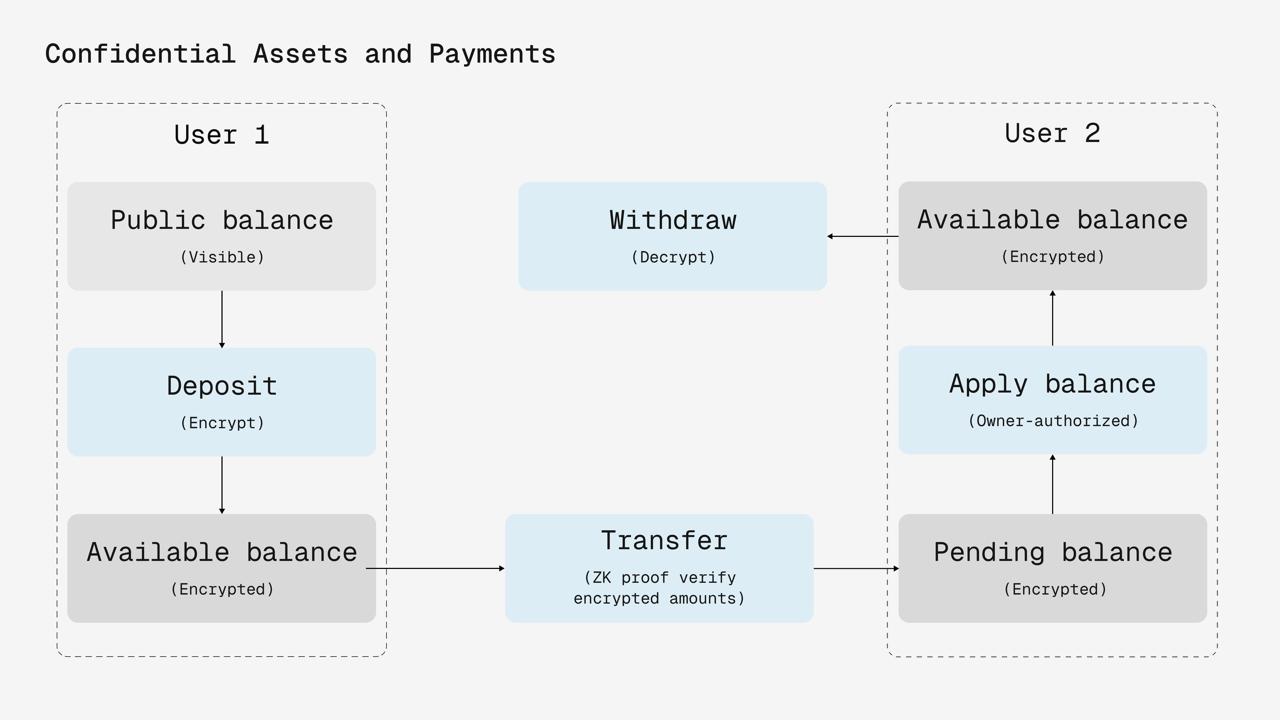
Defining Confidential Transactions
Amounts and balances are encrypted while addresses stay transparent. This combination lets you:- Support DeFi composability and integrations
- Stay traceable for audits
- Selectively disclose encrypted amounts and balances, only when and what it is required
Core Applications
Payments & Payroll
Payments & Payroll
- Confidential salaries for employees, contractors, and KOLs
- Private peer-to-peer, cross-border, and merchant payments
- Integration with payment networks for compliant, confidential settlements
DeFi & Trading
DeFi & Trading
- Encrypted orderflow and resistant to manipulation (e.g. frontrunning)
- Confidential liquidity, collateral, and position management
Treasury & Institutional
Treasury & Institutional
- Managing onchain VC liquid funds, corporate, and fund treasury operations
- Confidential inter-subsidiary and OTC settlements
Strategic Deals
Strategic Deals
- Private deals, acquisitions and token buyouts without market leaks
- Pre-announcement confidentiality and selective auditability
Real-World Assets (RWA)
Real-World Assets (RWA)
- Tokenized securities trading (equities, bonds, funds)
- Institutional settlement workflows (custody, issuance, venues)
Compliance & Regulation
Compliance & Regulation
- Selective disclosure and bad actor filtering
- OFAC and AML-compliant stablecoins and regulatory auditability
- Protection against GDPR/MiCA/CCPA/Clarity related data exposure risk for institutions
Agentic Finance
Agentic Finance
- Confidential agentic payments for merchants, compute resources, nano-payments, and supplychain
Why Fairblock
Performance
Sub-second client-side. Lightweight cryptography runs on the user side without introducing latency or external proving infrastructure.
Decentralization
No trusted hardware. The system does not rely on TEEs, trusted coprocessors, or centralized proving services.
Usability
No new wallets or keys. End users interact with their existing wallets. Keys are derived on demand, never stored.
Compliance
Selective disclosure. Confidentiality-by-default with controlled, post-execution access for authorized parties.
Join Confidential Builders Program
Apply to build on Fairblock’s Stabletrust SDK and pioneer the next generation of confidential transfers. https://build.fairblock.network/Next Steps
Architecture
Understand the cryptographic design powering confidential transfers.
Quick Start
Start building with the Stabletrust SDK.