

Overview
CUSD is a confidential USD stablecoin built by Fairblock in partnership with M0, PayPal and MoonPay. CUSD is backed by PYUSDx - a yield-bearing stablecoin issued by MoonPay, collateralized by PayPal USD (PYUSD), and built on M0’s stablecoin platform. Every CUSD is a confidential wrapper around one PYUSDx held in reserve, which lets CUSD inherit PYUSD’s regulated backing and underlying yield while adding Fairblock’s confidentiality layer on top. CUSD combines transparent stablecoin functionality with an optional confidential mode. Users can protect transfer amounts and balances while preserving visible entry and exit points, address-level controls, freezing pathways, and selective disclosure. It is designed for payments, treasury operations, payroll, merchant settlement, trading, and other financial activity that should not be publicly exposed.Why Fairblock Has a Flagship Stablecoin
Fairblock is building a turnkey confidentiality layer for stablecoins and tokenized assets. CUSD is Fairblock’s flagship confidential asset, enabling the network to deliver a fully integrated product experience, accelerate development, coordinate distribution, and align ecosystem economics. CUSD does not limit Fairblock to a single stablecoin. The same infrastructure can support confidential versions of existing stablecoins and tokenized assets. Issuers and partners can add confidentiality while preserving their own assets, liquidity, compliance systems, and distribution.Roles in the CUSD Ecosystem
Transparent and Confidential Modes
Transparent CUSD: Standard CUSD held and transferred publicly, with visible addresses and amounts. Confidential CUSD: CUSD deposited into Fairblock, where internal transfer amounts and balances are encrypted.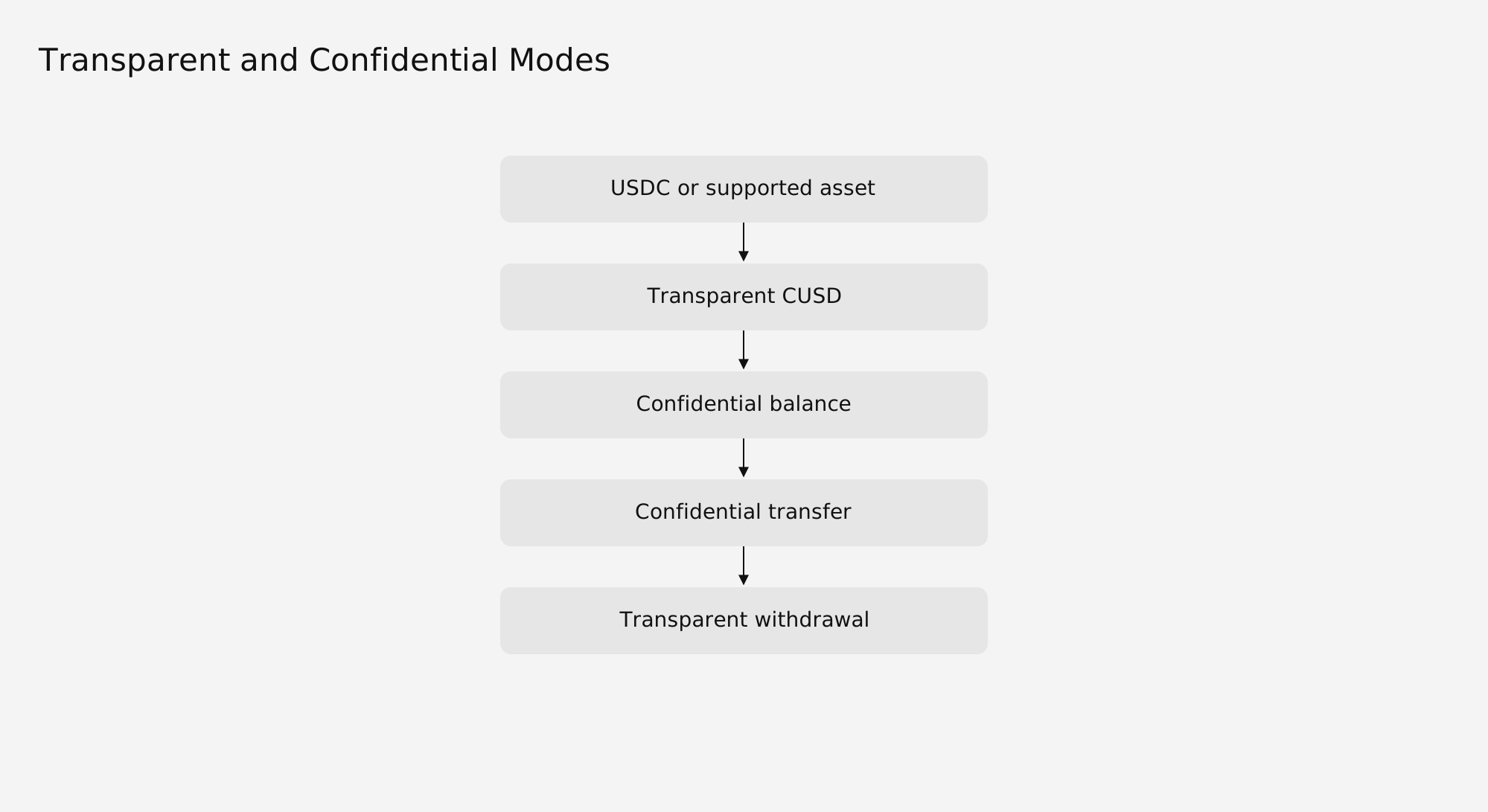
CUSD is the flagship implementation, not the limit of the platform. Fairblock’s confidential transfer infrastructure can also be integrated with other stablecoins and tokenized assets.
Why CUSD Matters
Protect Commercial Information
Keep treasury balances, payroll, merchant revenue, supplier payments, trading flows, and institutional transfers from being publicly exposed.
Preserve Operational Controls
Maintain visible entry and exit points, address screening, freezing pathways, monitoring, and selective disclosure.
Integrate Into Existing Products
Add confidentiality to wallets, payment applications, fintech platforms, treasury systems, and partner frontends without requiring a separate privacy chain or wallet.
How the CUSD Flow Works
The CUSD flow has three stages: transparent entry, confidential transfer, and transparent exit. First, a user receives or purchases transparent CUSD. For example, the user may swap USDC into CUSD through a supported frontend. At this point, CUSD behaves like a normal transparent stablecoin. The user’s address, transfer, and amount are visible and can be monitored using ordinary stablecoin compliance tools. Second, the user can deposit transparent CUSD into the Fairblock smart contract. This deposit is visible onchain. The deposit amount is visible. The depositing address is visible. This creates a confidential balance for the user inside the Fairblock system. Third, the user can make confidential transfers. Inside the Fairblock contract, transfers are represented as encrypted balance updates. The sender’s encrypted balance is reduced and the receiver’s encrypted balance is increased without publicly revealing the transfer amount. When a user wants to exit the confidential layer, the user withdraws from their confidential balance. The Fairblock smart contract sends transparent CUSD to the user’s transparent address. This withdrawal is visible and can be screened. In practical terms, the user receives transparent CUSD, deposits it into the Fairblock contract, receives an encrypted balance, transfers confidentially, and withdraws transparent CUSD when they want to exit.What Happens During a Confidential Transfer
A confidential transfer inside Fairblock is not a normal public token transfer from one user address to another. Once CUSD has been deposited into the Fairblock smart contract, the transparent CUSD is held by the contract. Internal confidential transfers are handled through encrypted accounting. The sender’s encrypted balance decreases and the receiver’s encrypted balance increases. Fairblock uses homomorphic encryption to support this flow. Homomorphic encryption allows the system to perform valid operations on encrypted values. This means balances can be updated correctly without exposing the underlying transfer amounts to the public chain. This is the key technical distinction. Transparent CUSD movement happens at identifiable entry and exit points. Inside the confidential layer, Fairblock protects amounts and balances while preserving monitoring, selective disclosure, and partner-specific compliance workflows.What Is Public and What Is Confidential
CUSD does not make all activity invisible. It protects the financial data that should not be globally public. Addresses interacting with the system remain visible. Deposits into the Fairblock contract are visible. Withdrawals from the Fairblock contract are visible. Deposit and withdrawal amounts are visible. The timing of deposits and withdrawals is visible. What becomes confidential is the internal transfer amount, the user’s confidential balance, and the encrypted accounting state inside the Fairblock layer. This distinction is central to CUSD. The system provides amount and balance confidentiality. It does not create an uncontrolled anonymity system.Compliance and Controlled Disclosure
Entry and Exit Controls
Deposits and withdrawals occur through visible transactions where addresses and amounts can be screened under applicable partner policies.Freezing and Policy Enforcement
Restricted transparent transfers, deposits, or withdrawals can be blocked or frozen through the relevant issuer, compliance-provider, or partner framework.Selective Disclosure
Authorized parties can receive scoped access to specific encrypted balances or transfers where operational, audit, compliance, or legal requirements apply.Partner Oversight
Partners can use Fairblock’s dashboard or integrate approved monitoring providers for their own users and transaction flows.Exact controls depend on the asset, network, issuer, jurisdiction, and partner configuration.
Why CUSD Is Not a Mixer
CUSD protects transfer amounts and balances. It is not designed to break the relationship between deposits, withdrawals, and participating addresses. Deposits and withdrawals remain visible, entry and exit points can be screened, applicable transactions can be restricted, and encrypted information can be selectively disclosed.Core confidentiality does not depend on a large anonymity set. Broader network participation can nevertheless improve metadata and transaction-pattern obfuscation.
The Fairblock Network Effect
As more users, wallets, applications, and assets participate, CUSD benefits from deeper confidential liquidity, stronger economic incentives, broader utility, and improved network-level metadata obfuscation. The broader Fairblock network also prevents confidential assets from becoming isolated across separate chains and proprietary privacy systems. Applications can use shared infrastructure instead of maintaining multiple incompatible encryption integrations.Why CUSD Is Different From Privacy Chains
CUSD is also different from broad privacy chains, shielded pools, or private execution environments. Some privacy systems are designed to hide many aspects of activity at the protocol level, including transaction relationships or broader execution details. Those systems may be useful for certain applications, but they are often not the right fit for regulated stablecoin payments, enterprise use, or partner-led compliance programs. CUSD is more targeted. It focuses on confidential stablecoin transfers where amounts and balances are encrypted, while address-level compliance, entry and exit controls, freezing pathways, and selective disclosure remain available. This narrower design is intentional. Most businesses, payment companies, issuers, fintechs, and institutions do not need an anonymity network. They need stablecoin payments that protect sensitive amounts while satisfying compliance, monitoring, audit, and legal obligations.Developer and Partner Integration Model
CUSD is designed to integrate into existing wallets, stablecoin flows, payment applications, fintech products, and partner frontends. A developer or partner can support transparent CUSD by default and offer confidential CUSD as an optional privacy mode. Users do not need to move into a separate privacy chain or adopt a new wallet. They can interact with a familiar stablecoin flow that supports confidentiality when needed. Partners can configure compliance based on their own requirements. A partner may require screening before deposit, screening before withdrawal, dashboard access, internal review rights, third-party monitoring, or scoped disclosure access for its own transfer flow. This makes CUSD suitable for partners that want to offer confidentiality without taking on the risks or friction of an uncontrolled privacy system.Benefits for Key Stakeholders
Wallets and Fintechs
Offer confidential payments through an existing interface without building cryptographic or disclosure infrastructure internally.
Enterprises
Protect treasury, payroll, supplier, merchant, and operational payment information.
Stablecoin and Asset Issuers
Add confidential functionality to existing assets while retaining control over issuance, distribution, and compliance policies.
Trading Firms
Reduce public information leakage around balances, transfers, and settlement activity.
Developers
Integrate confidential balances and transfers through Fairblock’s SDKs and APIs.
Core Compliance Position
CUSD’s compliance position is that confidentiality and compliance are compatible. CUSD protects sensitive amounts and balances from public exposure, but it does not remove the ability to screen addresses, monitor entry and exit points, freeze restricted transfers, support audits, or disclose specific information to authorized parties. Users first interact with transparent CUSD. They may optionally deposit into Fairblock to create a confidential balance. Internal transfers update encrypted balances. Withdrawals return transparent CUSD to a transparent address. This creates a practical compliance framework. Users enter through visible, screenable transactions. Users exit through visible, screenable transactions. Addresses remain part of the compliance perimeter. Amounts and balances are protected from public exposure. Authorized parties can receive targeted disclosure where required. Partners can configure additional monitoring for their own flows.Summary
CUSD combines a transparent stablecoin with optional confidential balances and transfers. Fairblock protects sensitive amounts from public exposure while preserving visible entry and exit points, configurable compliance controls, and selective disclosure. CUSD is Fairblock’s flagship confidential asset. The broader Fairblock platform can extend the same confidentiality infrastructure to additional stablecoins and tokenized assets.Get CUSD
Start using CUSD today.
Integrate Confidential Transfers
Build with the Stabletrust SDK.
Contact Fairblock
Talk to the team about partnering.