

A Shared Confidentiality Network
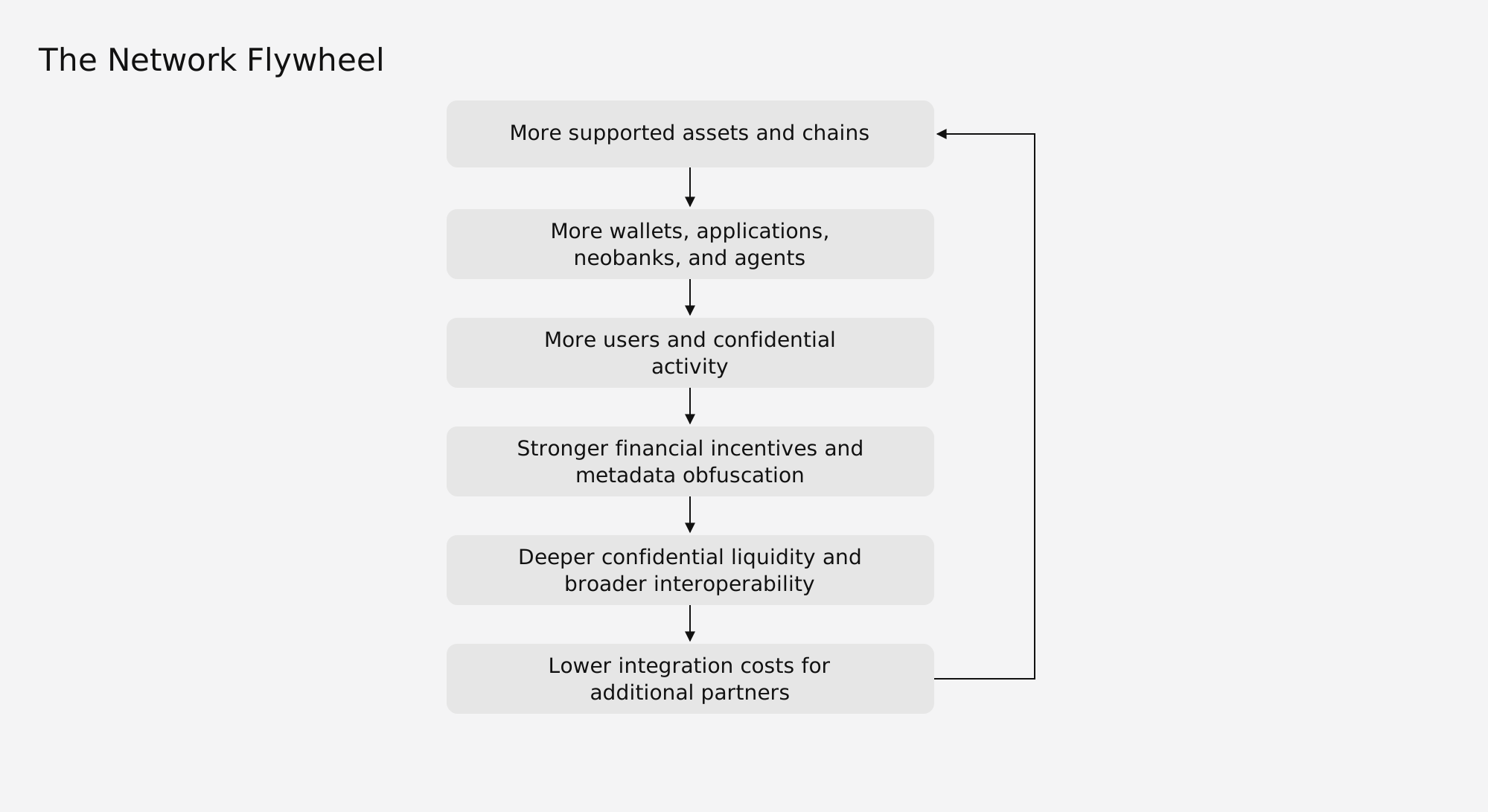
Fairblock becomes more valuable as more users, assets, applications, chains, wallets, neobanks, and AI agents use the same confidentiality network. Encrypted balances and transaction amounts remain confidential by design, even when only a small number of users are active. Fairblock does not depend on a mixer or a large anonymity set to provide core confidentiality. However, broader participation increases activity diversity and can strengthen network-level metadata and transaction-pattern obfuscation. More participation can also create stronger financial incentives. As confidential balances and activity grow, Fairblock can generate additional float economics, transaction fees, ecosystem incentives, and partner-funded rewards. These economics can be redirected toward users, applications, liquidity providers, and integrations that expand the network.Why Shared Infrastructure Matters
A shared, neutral confidentiality layer prevents every chain, issuer, wallet, application, neobank, and agent platform from building an isolated system. Fragmentation creates real problems:- Liquidity becomes divided across incompatible confidential environments.
- Applications must integrate and maintain multiple encryption or privacy SDKs.
- Cross-chain wallets and neobanks cannot practically maintain a separate confidentiality stack for every network.
- Smaller systems may use weaker cryptography, receive fewer security reviews, or provide no meaningful confidentiality.
- Centralized privacy services require businesses to trust individual operators with sensitive information.
- Applications and agents using incompatible confidentiality systems cannot easily interact.
The Network Flywheel
What the Network Provides
Stronger Confidentiality
Encrypted values remain protected by design, while increased activity improves metadata and transaction-pattern obfuscation.
Shared Economic Incentives
Float economics, transaction fees, and ecosystem incentives can reward productive confidential balances, activity, integrations, and liquidity.
Unified Liquidity
A shared confidentiality layer reduces the fragmentation created when each chain or issuer launches an isolated confidential environment.
One Integration
Wallets, neobanks, applications, and agent platforms can integrate a common confidentiality layer instead of maintaining separate systems for every chain and asset.
Neutral Infrastructure
Applications and assets can interact through shared cryptographic infrastructure without trusting a single centralized privacy provider.
Cross-Ecosystem Interoperability
Common confidentiality and disclosure mechanisms make it easier for assets, applications, chains, and agents to interact securely.